

The Culture Is Upstream from Politics
The culture is upstream from politics, always and everywhere
A few weeks ago I spent a night and day on the Clapham Common, a neighborhood a few miles from the Thames and Westminster, south of the City of London. For years the story written into its history has intrigued me; even to say more, has formed me.
225 years ago a group of men and women began to think together about the state of the union of England during its reign as the lead nation on earth, the days and years when “the sun never set on the British Empire.” The hard part of that famous story is that its political economy achieved its global dominance by slavery, and the scourge of the slave trade.
Good books have been written about this Clapham community, sometimes even irreverently calling them “the Clapham Saints,” telling the tale of their seriously-shaped vocation to abolish slavery. Bankers, businessmen, artists, politicians and clergy, their diverse occupations bound together by a common vocation. Living by this unusual credo, “Choose a neighbor before you choose a house,” they bought houses around the Common for the purpose of a common life.
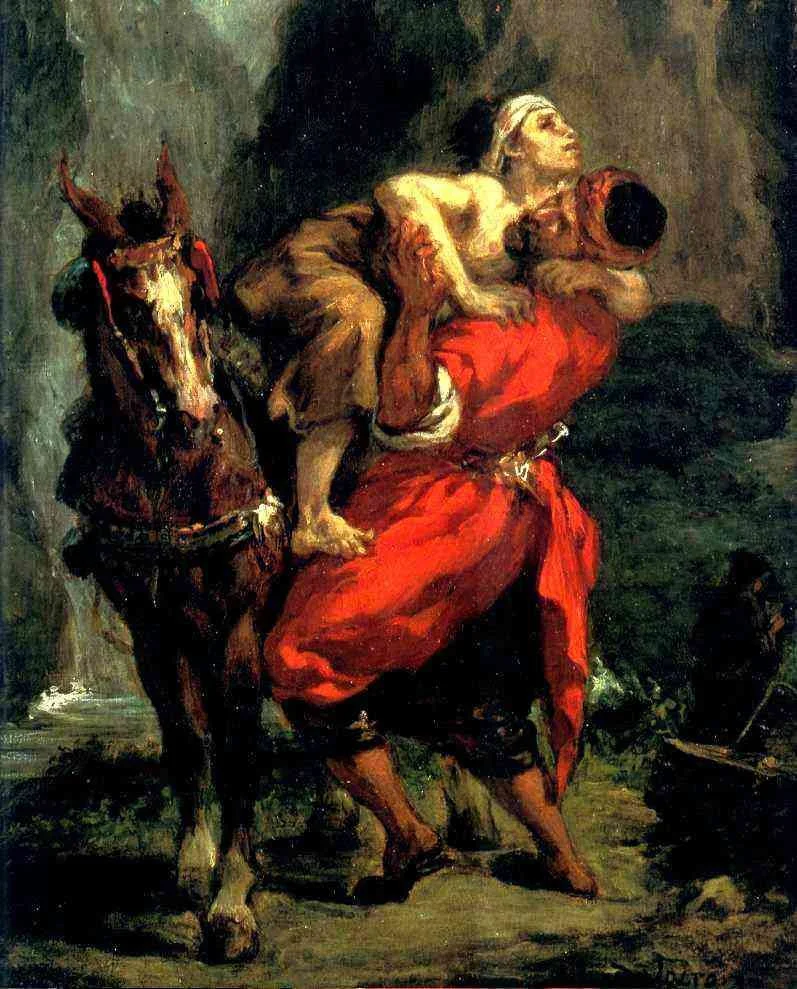
Eugène Delacroix, The Good Samaritan (1849). The Samaritan strains under the full weight of the wounded man. To draw near to another's suffering is to feel it in the body, to be slowed and burdened by it. This is the cost, and the calling, of being a neighbor.
One of the most visible members was William Wilberforce, a Member of Parliament for more than 30 years, who from his earliest years saw himself called to address the plague of slavery; but his hopes for social and political reform was stymied by the realeconomik of the day, the reality that England’s economic power was funded by the slave trade, which the Parliament was not going to change, apart from the will of the people.
With surprising resilience Wilberforce and his friends-of-the-heart poured themselves into the renewal of English life; in the language of the 21-century they worked with remarkable creativity and rare persistence to reweave the social fabric of their day. Child labor in factories. Agricultural and educational reform. The first humane society in history. Building housing for sexually abused woman. The establishment of Sierra Leone as a colony for freed slaves. Over time they brought into being 60 different “societies” all in hope that the British people would begin to see and hear the world differently, to see themselves as responsible to and for the world that was theirs, beginning with the most needy in their own city.
Generations later this story ripples through history, and through my life; for a thousand good reasons, it cannot not.
Story-formed people we all are, for both blessing and curse, the stories we take shape us, forming habits of heart, forging ways of seeing and hearing the world that have far-reaching consequences. For example, I once spent weeks of my life reading Alistair MacIntyre” After Virtue very carefully, very critically, working harder than I ever have, to understand its analysis and argument.
Of all that I learned, these words stand out, “I can only ask the question ‘What am I to do?’ if I have asked the prior question, ‘Of what story or stories do I find myself a part?’” Words worth pondering, words worthy of our most serious attention.
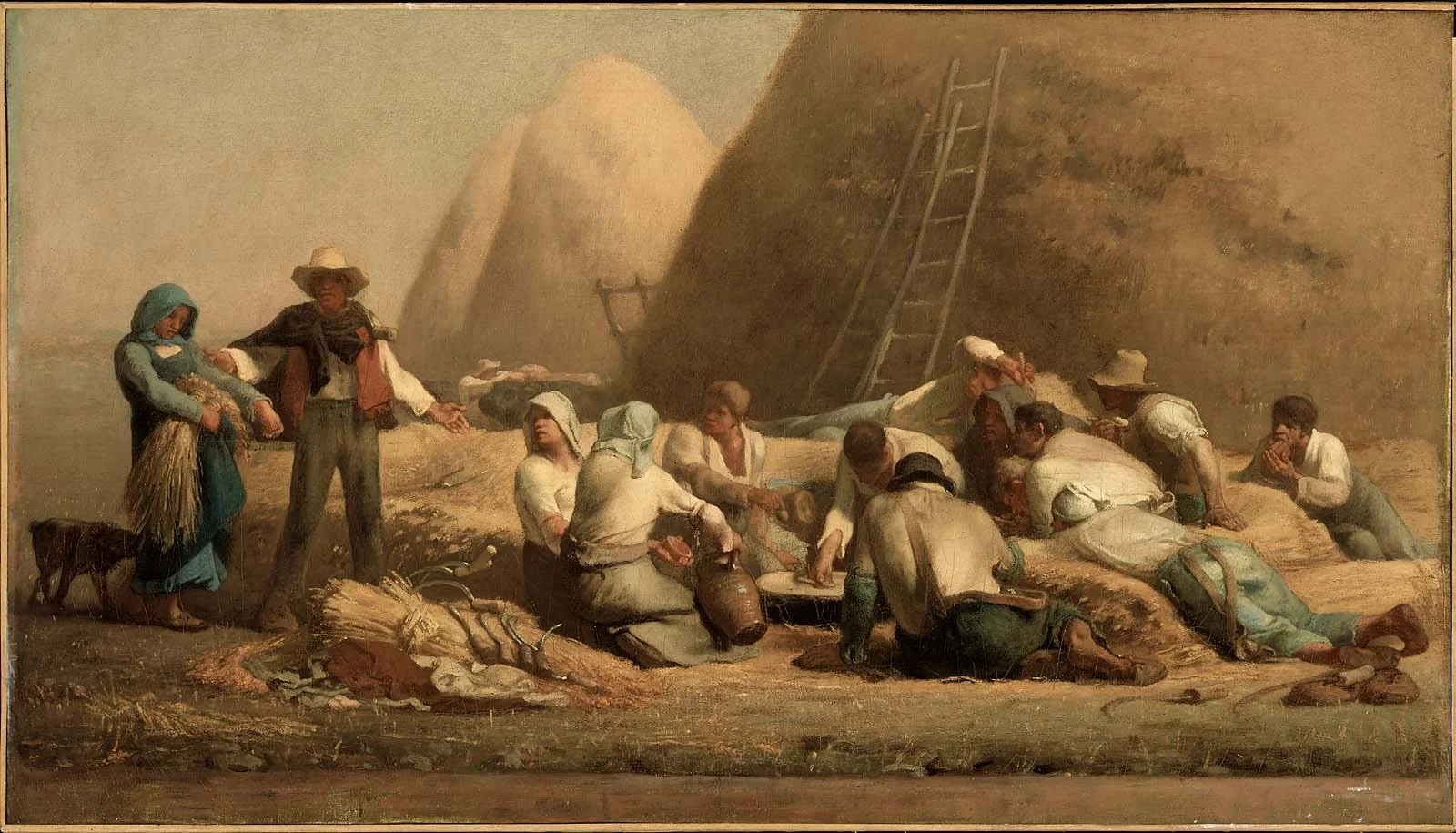
Jean-François Millet, Harvesters Resting (Ruth and Boaz) (1850–53). Millet dignified what the world overlooks — the tired body, the shared meal, the ordinary labor of ordinary people. Here work is not solitary but woven into community, and the stranger is drawn in rather than left at the edge of the field. Proximity, again: the harvest belongs to those who gather, and to those welcomed to rest among them.
I thought of them again recently because of my deepening commitment to the vision of Access Ventures, whose raison d’être is “catalytic capital for a flourishing society.” Simply said, they believe that people are at the heart of any true and lasting transformative change “in communities, companies, and culture”— and so they give themselves away for a vision to connect people with problems, spending days and years nourishing men and woman with serious visions of vocation in the marketplaces of America, to see themselves implicated in the complex needs of their cities. It is very good work being done by very good people.
The parallels to “the Clapham Saints” are profound, scattered across America as they are. Because they understand the consequences for the common good of the unraveling of the social fabric, they have chosen to give unusual attention to an aching wound, one that is largely unnoticed: the crisis brought about by failures in the foster care system.
The statistics are numbing because they are overwhelming. Most of those who fall through the cracks of the foster care system do not make it into adulthood with lives that are healthy, too many end up spending their adult years in prison. A heartache in every way, amidst heartaches of all kinds.
The hope of Access Ventures is for flourishing cities, for the flourishing of our society, and not unlike the visionary folk of 18th-century London, they know that the fissures of our life together create troubles that wound all of us, that make economic, and social wellbeing impossible— the culture upstream from politics as it always is.
(To learn more, please listen in to our podcasts exploring the complexity of the problem, and honest ways to address it: https://www.accessventures.org/fracture-flourish)
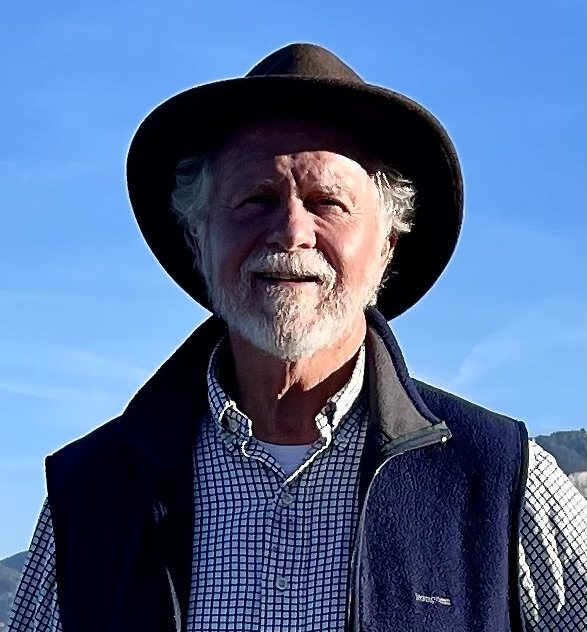
About the Author
Dr. Steve Garber is one of Access Ventures' inaugural Senior Fellows. He is principal of the Washington Institute for Faith, Vocation & Culture and previously served as Professor of Marketplace Theology at Regent College. His books include Visions of Vocation, The Fabric of Faithfulness, A Seamless Life, and most recently Hints of Hope: Essays on Making Peace with the Proximate.
Keep Exploring
Community flourishes when capital, people, and institutions move together.
Explore more on this topic — recommended episodes, posts, portfolio companies, and resources below:
More Than Profit podcast episodes


other blog posts

resources for download


We're proud to welcome Dr. Amy Orr-Ewing, one of the most respected apologists in the English-speaking world as a Senior Fellow at Access Ventures. In her essay, she argues that the renaissance of belief now stirring in boardrooms, parliaments, and centers of tech innovation is inseparable from the work of human flourishing we care about.