

Beyond Transactions: Rethinking Funder–Nonprofit Partnerships Through Human Ecology
Originally posted December 2017, updated May 2025)
Too often, the relationship between funders and nonprofits is reduced to efficiency metrics, quarterly reports, or outputs that can be tallied neatly in a dashboard. But what if we reimagined these partnerships not as transactions, but as collaborations in cultivating the civic ecosystems where people and communities truly flourish?
Drawing inspiration from Thriving Cities and Josh Yates’ human ecology framework, we can begin to see cities as more than economic engines or policy arenas. Cities are both beautiful and broken, made up of cultural, structural, and relational “endowments” that form the soil where civic life grows. Funders, then, are not just financiers - they are gardeners, co-stewards of these ecosystems.
From Transaction to Faithful Presence
In this model, partnerships are not simply about writing checks or meeting KPIs. They are about faithful presence - remaining proximate to communities and organizations for the long haul.
Steve Garber reminds us that to love the world, we must first know the world, and knowing requires being proximate. We cannot love from a distance. Funders must resist the temptation to stay in offices, armed only with metrics and reports. Instead, they must walk into neighborhoods, sit at kitchen tables, and hear stories firsthand. As Dr. Garber puts it, this kind of proximate love is what makes us whole, even as we seek to repair what is broken.
This echoes themes from his Washington Institute essay On Being Whole and Holy - that maturity is not only professional competence but theological depth, integrity, and wholeness. For funders and nonprofits alike, this means our partnerships should form us into people who are not just effective, but faithful.
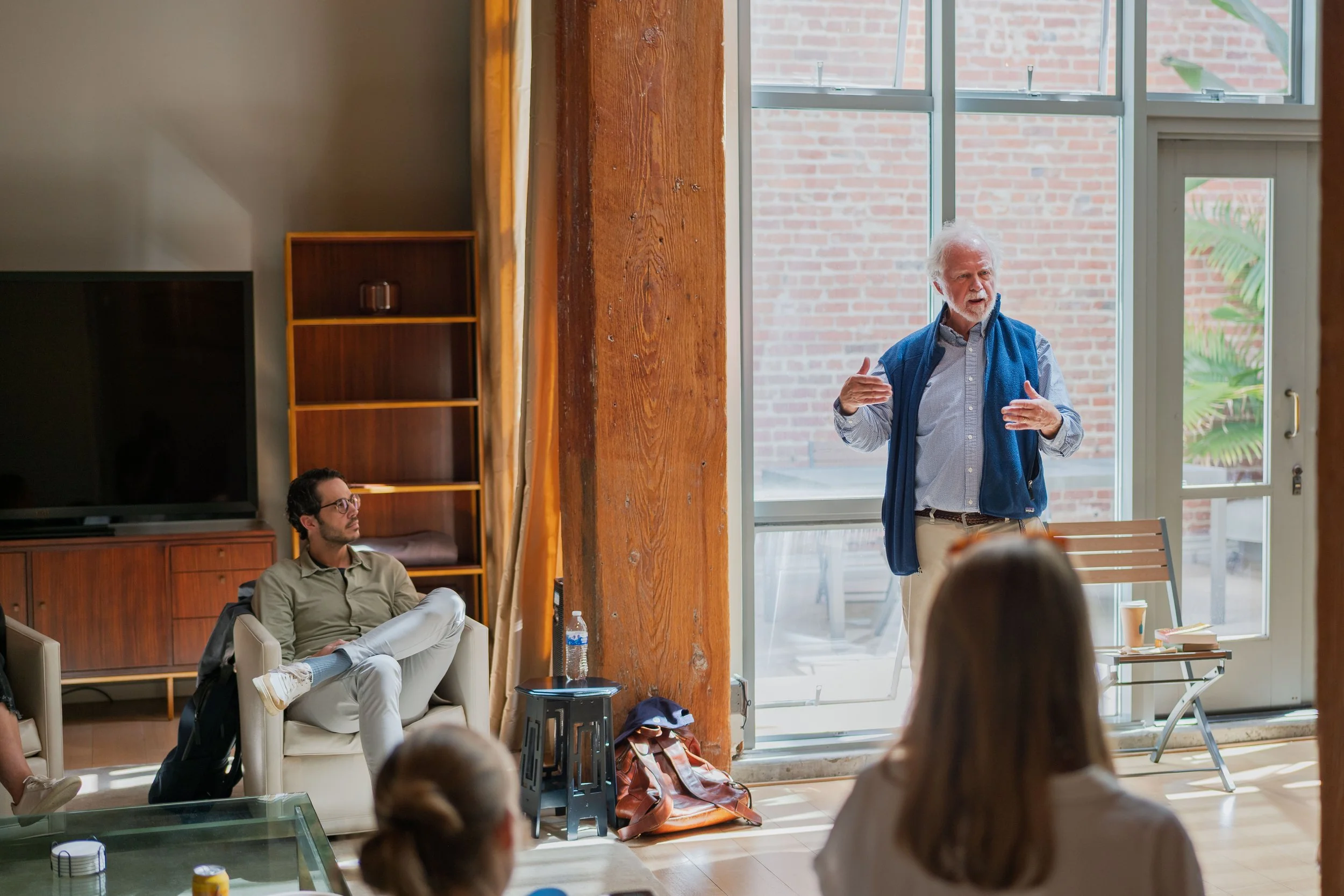
Dr. Steve Garber speaking on justice and the proximate with our Exec Fellows
Justice as Pilgrimage
This ecological view reframes partnership as pilgrimage: a long obedience in the same direction. Instead of chasing quick wins, funders support nonprofits in repairing broken systems, pursuing justice, and creating the cultural conditions for human flourishing.
Vocational Design for Repair
At their best, nonprofits help communities imagine a different future. Funders can amplify this by aligning capital with institutional repair, ensuring that we are not just making systems more efficient but making them more just.
Civic Love and Moral Vision
Cities thrive when funders and nonprofits together foster civic love - investments not only in programs, but in people, relationships, and moral imagination. This is where the human ecology lens is vital: it reminds us that financial capital is just one endowment among many, and that cultural, social, and spiritual capital matter just as much.
Where to Go Deeper
Podcast | More Than Profit → Josh Yates on Thriving Cities explores how human ecology can reframe philanthropy.
Podcast | More Than Profit → Justin Beene on Proximity & Place-Based Innovation shares why funders must prioritize community ownership.
Podcast | Fracture to Flourish: Aging Out → Season 1 explores what it means to walk alongside young people aging out of foster care—an example of faithful presence in one of our most vulnerable systems.
Essay | The Washington Institute → On Being Whole and Holy frames the deeper call to integrity and theological maturity in our work.
Blog | Access Ventures → Explore more essays on rethinking philanthropy, systems change, and inclusive economies on the Access Ventures Blog.
Small Steps You Can Take
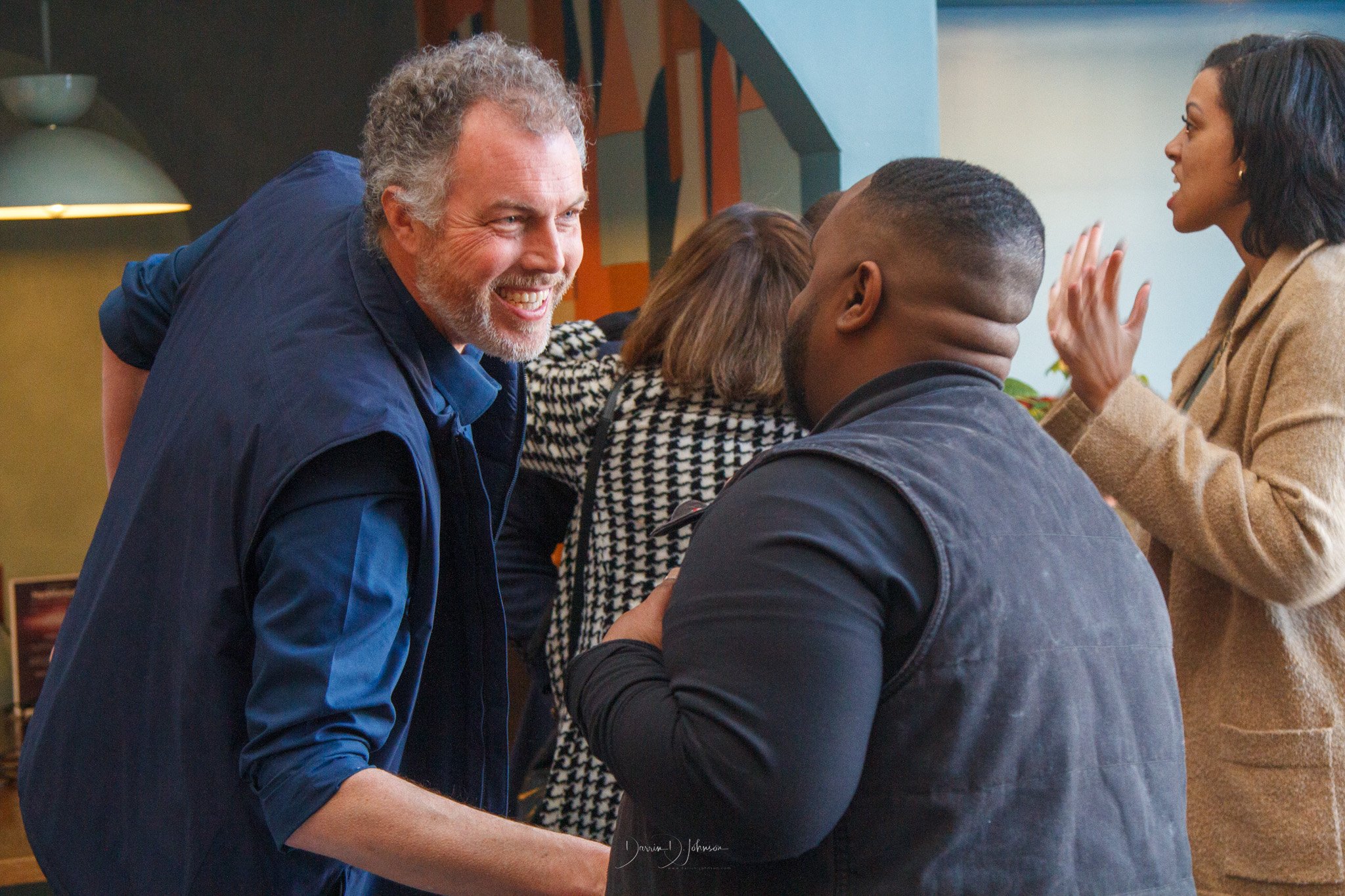
Even if you’re not running a foundation or managing a large portfolio, you can play a part in reshaping funder–nonprofit partnerships toward flourishing:
Listen and Learn Before You Act
Spend time with local nonprofits, attend community gatherings, or simply ask leaders, “What would actually be helpful?”Give Consistently, Not Just Reactively
Instead of only giving in response to a crisis, set up a recurring donation - even a small one. This helps nonprofits plan long-term.Invest in Relationships, Not Just Results
Volunteer your time, join a nonprofit board, or simply check in regularly with organizations you support.Practice “Faithful Presence” in Your Own Neighborhood. Get to know your neighbors, support local businesses, and notice who in your community is often unseen.
Use Your Capital Beyond Money
Think of your social capital, your skills, your networks - who could you connect to open doors for a nonprofit leader or entrepreneur?
Call to Action
If you’re a funder, the challenge is clear: move from transaction to transformation.
If you’re an individual, start small - listen more, give consistently, show up relationally, and use your networks generously.
Because in the end, flourishing is never just financial. It’s ecological, relational, proximate, and deeply human.