

At Access Ventures, we believe money alone can’t change the world, people do. That conviction is why we’re proud to partner with and fiscally sponsor Catalyze, a team working on one of the most overlooked layers of the financial system…who gets to decide where capital goes.
Most efforts to expand access focus on founders, but Catalyze goes a layer up, backing the first-time and unconventional fund managers (Capital Entrepreneurs) who bring new networks, new models, and lived experience the industry hasn’t valued. It’s a direct expression of what we mean by building systems for better access, and a reminder that we don’t flourish alone.
We’re grateful to Maegan Moorehart and the Catalyze team for sharing their thinking here. We think you’ll see why we’re excited about where they’re headed.
Catalyze started as a shared conviction that expanding who makes investment decisions could change how, and ultimately where, capital flows. Our team arrived there from different places: from the founding team of an investment firm, from advising family offices, from investing in fund managers as an LP. But we each saw the same thing from where we sat: skilled managers being overlooked and innovative strategies struggling to get off the ground.
Much of finance has evolved to concentrate wealth, power, and ownership, and it does that well. The investors trying to build something different, bringing new networks, new perspectives, and new ideas about what capital can do, often have the hardest time raising, simply because what they’re building is unconventional.
Those experiences led us to a collective vision of a world where a firm’s opportunity to succeed is based on talent, track record, and access to differentiated investments, rather than limited by the team’s socioeconomic status or the personal wealth within their networks.
Our early work was shaped by ecosystem partners like Access Ventures, who encouraged us to address broken systems and to build the conditions in which people can belong and contribute. At Catalyze, that began with a fairly practical observation about how capital actually moves.
The layers of the system
A founder building a business needs funding, and rarely just one kind. Depending on what they are building and when, that might be venture equity, working capital, growth equity, debt, or a grant that enables the first experiment. They look for funding from friends and family, from funds, from CDFIs and banks.
Each of those funding sources has someone deciding who gets what, and on what terms. The people who design funds, set criteria, and make the ultimate investment decisions represent this layer of the financial system, and they hold real power over which businesses get built and who gets to own them. Historically, that power has been held by a concentrated few.
At Catalyze, we focus on the people trying to enter that layer: first-time fund managers across venture capital, growth equity, and private credit, among other strategies. Traditional finance has long favored those with generational wealth and institutional connections over those without. That is as true for these new fund managers as it is for the founders they back. Someone launching a fund around a new model, or bringing lived experience the industry hasn’t valued, faces the same preference for scale, collateral, and inherited wealth over expertise and potential.
So the questions underlying access to capital formation are also questions about access to asset management: Who gets to make investment decisions? Who gets the opportunity to shape markets, and not only take part in them?
Building systems for better access
Entrepreneurship is one of the most direct ways people engage with the economy and a primary driver of ongoing innovation. It is problem-solving that rewards experimentation and long-term value creation, and it grows more dynamic as more people take part as creators, builders, and owners. The same is true of investing. The financial system thrives with more perspectives and more lived experience, and it needs people with ingenuity, risk appetite, and a willingness to design structures tailored for the businesses and communities they know.
New investors need much of what any new business needs: early, flexible capital, support, and someone willing to take a risk before the track record exists. While founders turn to accelerators and incubators, fund managers trying something new have almost none of that innovation infrastructure. That is the gap Catalyze steps into. We help these Capital Entrepreneurs launch and scale, so that more purpose-built capital reaches businesses that have been overlooked.
Employee ownership strategies are one example. Converting a business to employee ownership keeps it rooted in its community and builds wealth for the people who make it run. But the funds financing those transitions are still few, and the managers leading them often encounter the same barriers as any first-time or innovative GP. Catalyze works to foster the conditions for these managers to succeed.
Access, one layer up
Our aim is to extend access one layer up, expanding the opportunity to decide where capital goes. We work to increase agency and support decisions staying close to the people and places they affect. And it is a particular way of holding risk: backing people and models before they’re proven, because that is how we build systems that last.
If capital is the scaffolding of opportunity, it matters who gets to build it. The more people who shape how capital moves, the more opportunity created for everyone.
About the Author
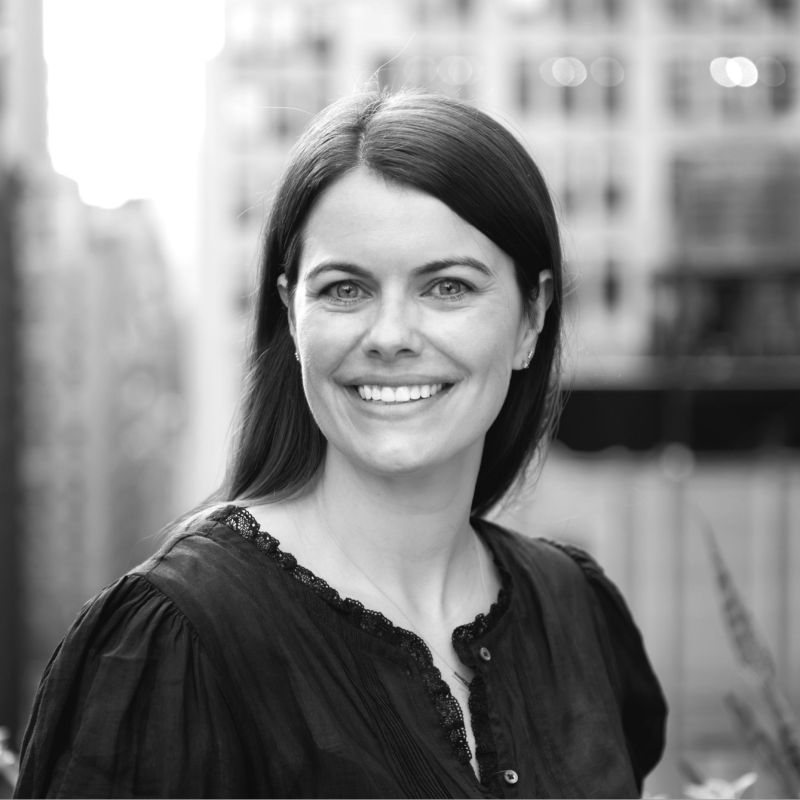
Maegan Moorehart is Co-Founder and CEO of Catalyze. Before launching Catalyze, she was on the investment team at Blueprint Local, an impact investment firm, and she has spent her career exploring how capital can shape communities. She lives in New York City with her husband and daughters.